.png)
.png)
Best Neighborhoods in Roseville CA

Geoff Goolsby
I’m a trusted real estate advisor serving Roseville and the greater Sacramento area, helping thoughtful homeowners navigate buying and selling with ...
I’m a trusted real estate advisor serving Roseville and the greater Sacramento area, helping thoughtful homeowners navigate buying and selling with ...
Best Neighborhoods in Roseville CA: 12 Communities Worth Knowing
A local guide to the neighborhoods that define Roseville — from established estates to brand-new builds
Roseville doesn’t just rank among the best places to live in the Sacramento area — it consistently earns that distinction across California. Top-rated schools, an extensive trail system, over 80 parks, and a city infrastructure that punches well above its weight make it a magnet for relocating families, Bay Area transplants, and retirees looking for quality without the coastal price tag.
But Roseville is not one neighborhood. It’s 30+ distinct communities spread across roughly 44 square miles, each with its own character, price point, and lifestyle. The mistake most home buyers make is treating Roseville as a monolith. East Roseville feels nothing like West Roseville. A 1970s rancher in Cirby Ranch offers an entirely different experience than a 2023 Lennar build in Fiddyment Farm.
We’ve helped over 200 families find their home in Roseville, and as a lifelong resident, I’ve lived in multiple neighborhoods across the city. There are over 30 distinct neighborhoods in Roseville — this guide covers 12 of the best. They’re not ranked against each other, because “best” depends on what matters to you. Instead, each entry highlights what makes it stand out, who it’s ideal for, and the honest trade-offs no one else will tell you. Just because a neighborhood didn’t make this list doesn’t mean it’s not the right fit for you — Roseville has quality options across the board.
A note on scope: Granite Bay borders Roseville and shares some school boundaries, but it sits in unincorporated Placer County with a different tax structure, service model, and price range. We’re keeping this guide focused on the city of Roseville proper.
Real estate statistics are provided for general reference and are subject to change. Data sourced from Homes.com and Redfin as of early 2026. We recommend verifying current figures with a local real estate professional.
Highland Reserve — Best for Convenience and Everyday Livability
Everything Roseville has to offer, within two miles of your front door
I’ve owned three homes in Highland Reserve. That alone should tell you something. This neighborhood sits in the geographic sweet spot of Roseville — less than two miles from the Westfield Galleria, the Fountains shopping center, Whole Foods, Safeway, both major hospitals, Villa Sport, Highway 65, and miles of connected bike trails. You can walk to Lazy Dog for dinner and hit the pickleball courts on your way back.
Highland Reserve was master-planned starting in the mid-1990s and continued building into the early 2000s, producing a mix of starter homes around 1,200 square feet up to executive properties over 4,000 square feet, many of them on golf course lots. The demographic is broad — young families, move-up buyers, empty nesters — all benefiting from the same central location. Community events are a real thing here: annual Easter egg hunts, pumpkin patches in the park, 4th of July celebrations. The neighborhood’s roughly 1,860 homes generate a healthy 5% annual turnover, which means you’ll have options when it’s time to buy.
Schools include Roseville High (A rating on Niche) and Buljan Middle School (B+ rating). By most standards, this is a strong school environment — not the absolute highest-rated district in Roseville, but reliably good.
The honest trade-off: The Heritage at Diamond Oaks section technically overlaps Highland Reserve. Homes there are larger and accommodate bigger families well, but Diamond Oaks Road can get busy with through traffic. Some of the older homes in the neighborhood are due for interior updates, though they’re structurally solid. Mello-Roos is minimal or nonexistent in most of the community.
📊 Median sale price: ~$645K–$685K | Avg. days on market: ~25–30 days | Homes: ~1,860 | Build era: Mid-1990s–2000s | Competitive market
View current market data and homes for sale in this neighborhood
Stoneridge— Best for Affluence and Outdoor Access
Roseville’s highest elevations, best trails, and strongest property values
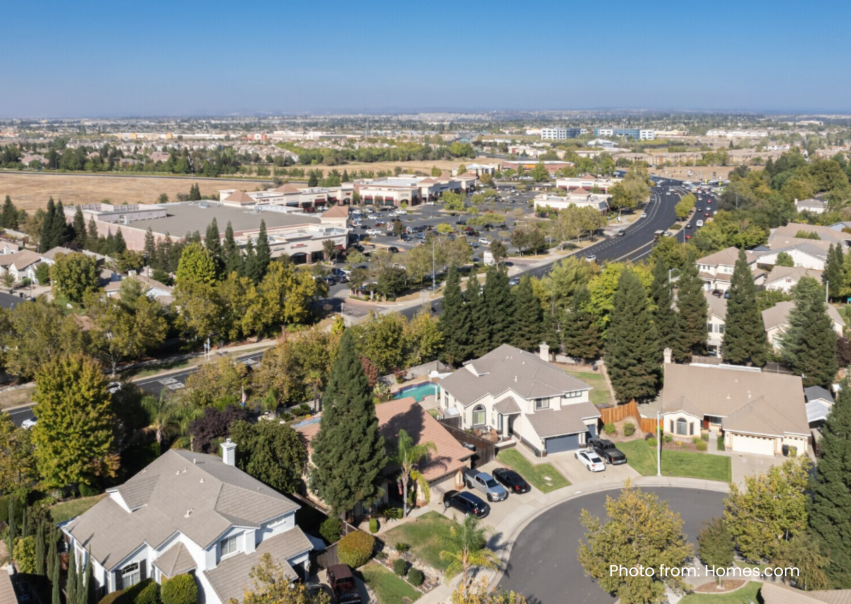
Stoneridge is Roseville’s most affluent neighborhood by property value and per capita income. It’s also the only place in the city where topography gives you genuine elevation and view lots — a rarity in a city that’s otherwise flat. From certain properties, you can see out across the valley and toward the foothills.
The neighborhood runs alongside the Miners Ravine Trail, a paved multi-mile route popular with runners, cyclists, and dog walkers. That trail connectivity, combined with proximity to Sutter Roseville Medical Center and easy access to I-80, makes Stoneridge feel both tucked away and well-connected. Homes here were built primarily from the early 2000s onward under the Stoneridge Specific Plan, with a mix of production and semi-custom builds. Gated communities like Stoneridge West offer custom homes, while other sections feature standard production layouts. School assignments include Stoneridge Elementary (A−), Warren T. Eich Middle (A), and Oakmont High (A−) — all strong performers.
The honest trade-off: There’s no close grocery store within the neighborhood itself. You’ll drive to get essentials, which is a minor inconvenience but worth noting. The premium pricing also means entry-level buyers are mostly priced out — this is a move-up or relocating-professional market.
📊 Median sale price: ~$879K | Avg. days on market: ~27–29 days | Avg. household income: $164K | Build era: 2000s–present | Competitive market
🔗 View current market data and homes for sale in this neighborhood
Johnson Ranch — Best for Schools and Established Character
Mature trees, craftsman-style homes, and access to Granite Bay High
If school ratings are your primary filter, Johnson Ranch will likely be your first stop. This East Roseville neighborhood is zoned for Granite Bay High School — rated A+ on Niche and ranked as the No. 1 public high school in Sacramento. Olympus Junior High (A) and Maidu Elementary (A) round out a school pipeline that’s hard to match anywhere in Placer County.
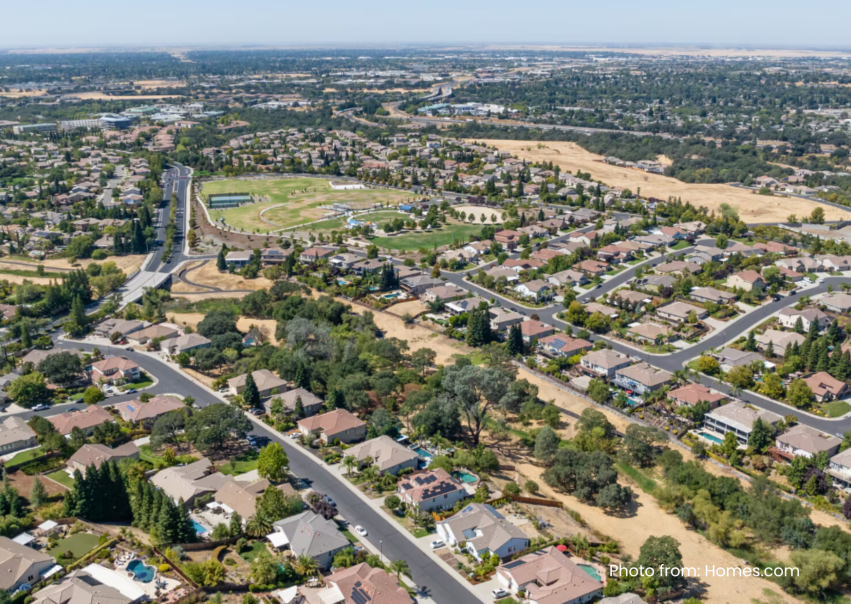
Johnson Ranch borders Granite Bay and shares some of that area’s premium character: mature landscaping, large lots, big trees, and open streets that feel nothing like a typical productionhome subdivision. Most homes were built in the 1980s through the early 2000s, and many feature craftsman-style architecture with real character. The Johnson Ranch Sports Club offers 25 tennis courts, 28 pickleball courts, multiple pools, and two weightlifting centers — all within the neighborhood. Maidu Regional Park, one of Roseville’s largest and best-maintained parks, is close by.
With about 1,500 homes and only ~50 selling per year, this is a lower-turnover neighborhood. Buyers need to be patient and ready to move when something hits the market.
The honest trade-off: Inventory is tight. The low turnover means fewer choices in any given year, and prices reflect the school-district premium. Homes that back up to Douglas Boulevard will experience road noise. Some of the older properties (1980s builds) will need kitchen and bath updates.
📊 Median sale price: ~$865K | Avg. days on market: ~31–37 days | Homes: ~1,500 | Schools: Granite Bay High (A+), Olympus JH (A), Maidu Elem (A) | Very competitive
🔗 View current market data and homes for sale in this neighborhood
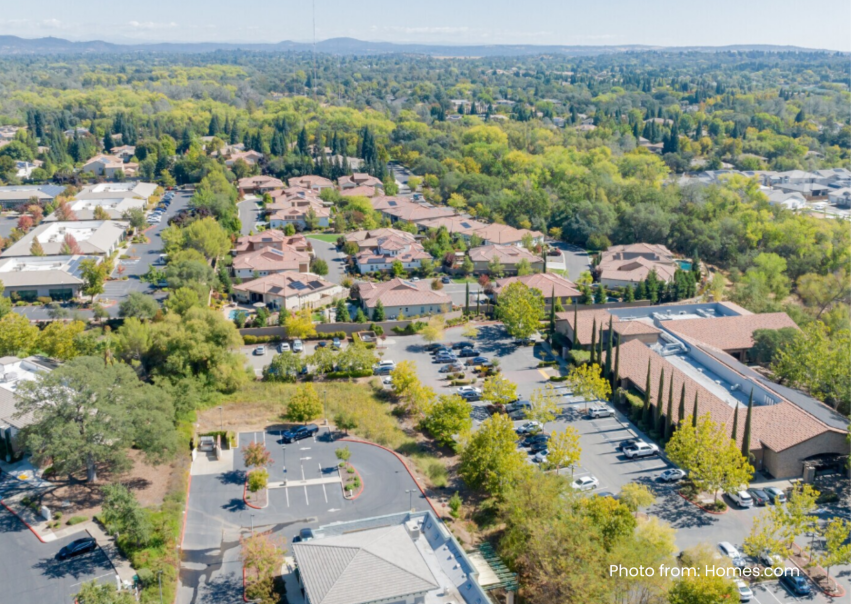
WestPark - Best for Variety and Community Completeness
A neighborhood still growing, with something for nearly every buyer profile
WestPark is Roseville’s most complete neighborhood in terms of housing variety. Patio-style homes for downsizers, single-family homes from 3 to 6 bedrooms, homes with 6-car garages for collectors, a 55+ active adult section, and even assisted living — all within the same master plan. Started in the early 2000s and still building out, WestPark is home to the brand-new West Park High School (A− on Niche), which looks more like a college campus than a high school.
The safety and crime index ranks among the best in the city. Trails, parks, and schools are woven into the plan. The community has a newer, more modern feel than east Roseville neighborhoods, and the housing stock reflects post-2005 building standards with energyefficient features and open floor plans.
The honest trade-off: Amenity access is the main gap. You’ll drive to most shopping, dining, and errands — there are a couple of new restaurants and a coffee shop, but nothing like the walkable convenience of Highland Reserve or Diamond Oaks. Mello-Roos taxes are a factor in the newer sections and can add $2,500–$4,500 annually to your tax bill. Make sure you check the specific tax parcel before buying.
📊 Median sale price: ~$600K–$700K | Avg. days on market: ~33 days | Housing range: ~$500K– $1.2M | Build era: 2000s–present | Somewhat competitive
🔗 View current market data and homes for sale in this neighborhood
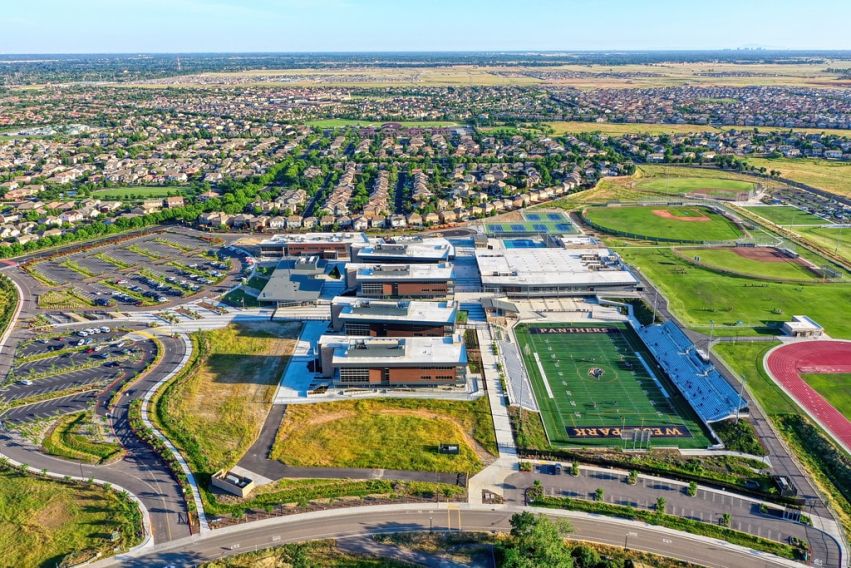
Fiddyment Farm - Best for New Construction and Families
Brand-new homes in Roseville’s fastest-growing corridor
Fiddyment Farm is where you go if you want a brand-new home in Roseville. Builders like Lennar, JMC Homes, and Taylor Morrison are still actively building, with home sizes ranging from 1,400-square-foot single stories up to 4,000-square-foot two-story family homes. As of 2026, there are roughly 2,700+ homes in the neighborhood and that number is still climbing.
The community has been ranked as one of the safest neighborhoods in Roseville by neighborhood safety databases. My take — as someone who’s experienced every neighborhood in this city — is that almost all of Roseville feels safe, but Fiddyment Farm benefits from being tucked into the far northwest corner with minimal pass-through traffic. Schools include Fiddyment Farm Elementary, Barbara Chilton Middle, and either Roseville High or West Park High depending on your section. Both high schools carry A or A− ratings.
The 7% annual turnover rate means you’ll typically have more inventory to choose from than in older, lower-turnover neighborhoods.
The honest trade-off: Commercial development hasn’t caught up to the residential growth yet. Amenities, restaurants, and shopping are limited compared to central Roseville. The Plaza at Blue Oaks (anchored by Raley’s) is the closest retail hub, about a mile away. Mello-Roos taxes apply to most parcels and can be significant — budget accordingly.
📊 Median sale price: ~$690K–$730K | Avg. days on market: ~37 days | Homes: ~2,700+ | Builders: Lennar, JMC, Taylor Morrison | Build era: 2008–present
🔗 View current market data and homes for sale in this neighborhood
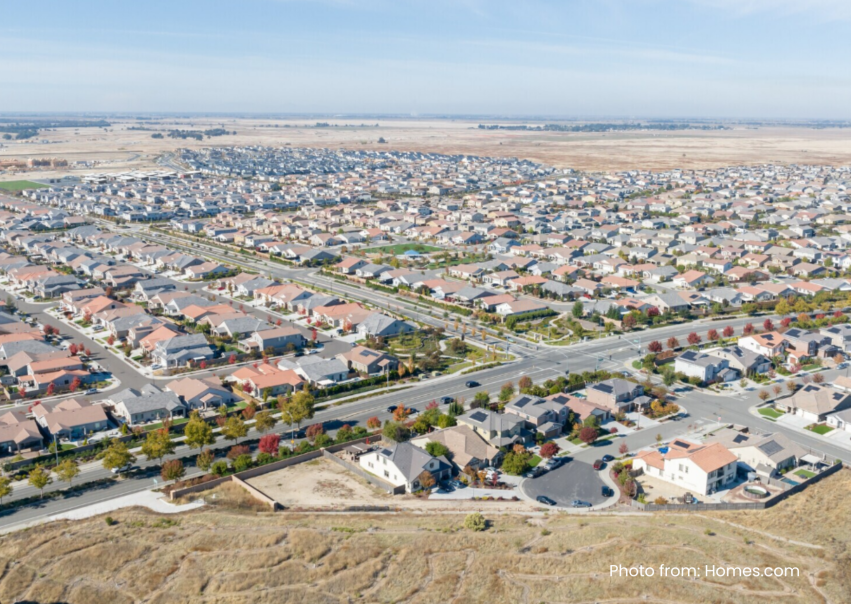
Diamond Oaks - Best for Classic Roseville Charm
Golf course living, mature trees, and one of Roseville’s most charming streetscapes
Diamond Oaks is one of Roseville’s original higher-end neighborhoods, and arguably one of its most charming. Mature trees line the streets. Yards are generous by today’s standards. Some homes border Diamond Oaks Golf Course, while others sit along Sierra View Country Club — giving the neighborhood a quieter, more established feel that newer communities simply can’t replicate.
Most homes were built in the 1970s, offering a mix of single-story ranchers and two-story layouts. The location mirrors Highland Reserve’s convenience advantage — the Galleria, Fountains, hospitals, and freeway access are all close by. You’re also near Old Roseville and Downtown, which gives you walkable access to the city’s growing restaurant and coffee scene.
The honest trade-off: The homes are older, and most floor plans reflect 1970s design sensibilities — smaller kitchens, fewer open-concept layouts, and average square footage in the 1,800–2,200 range. This rules out buyers who need 3,000+ square feet. Homes on Diamond Oaks Road itself deal with through traffic, which can be noticeable during commute hours. Fully updated homes command a premium; unrenovated properties will need investment.
📊 Median sale price: ~$680K–$725K | Avg. days on market: ~33 days | Build era: 1970s | Production builds | Golf course lots available
🔗 View current market data and homes for sale in this neighborhood
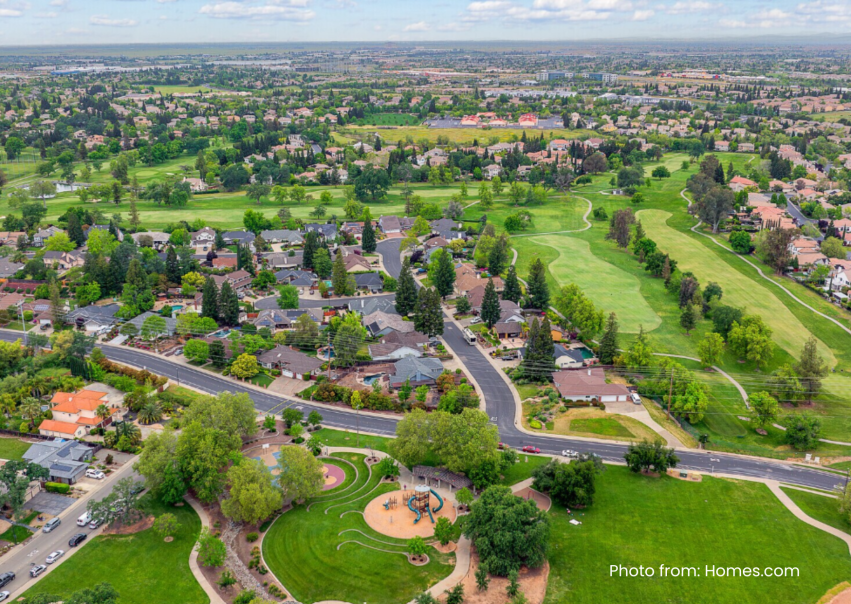
🎬 Want to see these neighborhoods in person?
We previously broke down our Top 5 Roseville neighborhoods on video — covering Highland Reserve, Stoneridge, Johnson Ranch, Fiddyment Farm, and Foothill Junction in detail. If you want a visual tour with real-time market commentary, check out the full video on our YouTube channel or read the companion blog post at thegoolsbygroup.com.
Blue Oaks -Best for Established North Roseville Living
No longer the edge of town — now one of Roseville’s most well-rounded communities
For a long time, Blue Oaks felt like the far northwest frontier of Roseville — secluded and a little disconnected. That’s changed dramatically. Schools, parks, the Nugget Market shopping center, Chick-fil-A, 24 Hour Fitness, and a growing list of services have filled in around the neighborhood. Blue Oaks is now one of the more well-rounded communities in the city.
Homes were built primarily in the early 2000s by Woodside Homes, US Homes, and some JMC. The housing stock ranges from medium to upper-end, with the Crocker Ranch subdivision standing out as one of the higher-end pockets in all of Roseville. You’ll find gated sections with larger homes, private pools, and three-car garages alongside more modest family homes.
The honest trade-off: The current hot topic is school assignments. Blue Oaks has historically been farther from its designated middle and high schools, and recent enrollment pressures from WestPark and Fiddyment Farm have caused boundary shifts. Some families expecting Cooley Middle School end up assigned to Buljan instead. If school boundaries matter to you, verify the specific assignment for any property before buying.
📊 Median sale price: ~$650K | Avg. days on market: ~37 days | Avg. household income: $176K | Builders: Woodside, US Homes, JMC | Build era: Early 2000s
� View current market data and homes for sale in this neighborhood
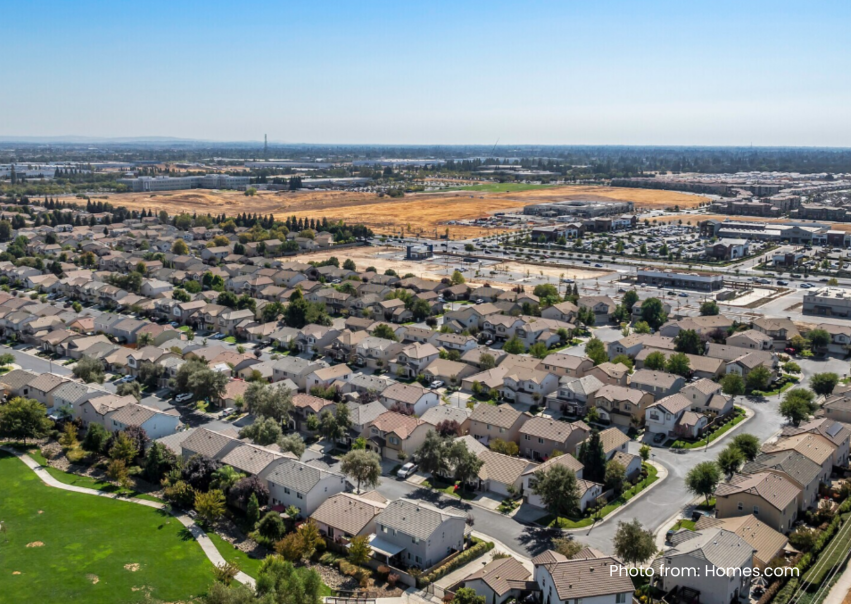
Woodcreek Oaks -Best for Value in a Strong School District
No longer the edge of town — now one of Roseville’s most well-rounded communities
Woodcreek Oaks delivers an uncommon combination: Dry Creek School District assignment (a smaller, well-regarded district), direct access to trails and open space, and pricing that sits below the citywide median for the quality you get. Many homes back up to Silverado Middle School and the adjacent walking trails, while others border Woodcreek High School and the reserve.
Built mostly in the late 1990s by a mix of production builders, the homes here range from singlestory 1,200-square-foot properties to two-story 4,000-square-foot family homes. One unique feature — you can find small single-story homes with three-car garages, which is unusual for Roseville. The lots tend to be larger than what you’ll find in newer West Roseville communities, and the neighborhood feels good without being over-the-top.
The honest trade-off: The homes are from the late ’90s, so many are due for interior updates. You won’t find a lot of “wow factor” properties — these are well-built, functional homes that prioritize space and location over flash. But that’s also why the pricing remains accessible.
📊 Median sale price: ~$640K–$650K | Avg. days on market: ~23 days | Schools: Woodcreek High (A), Silverado Middle, Dry Creek District | Build era: Late 1990s
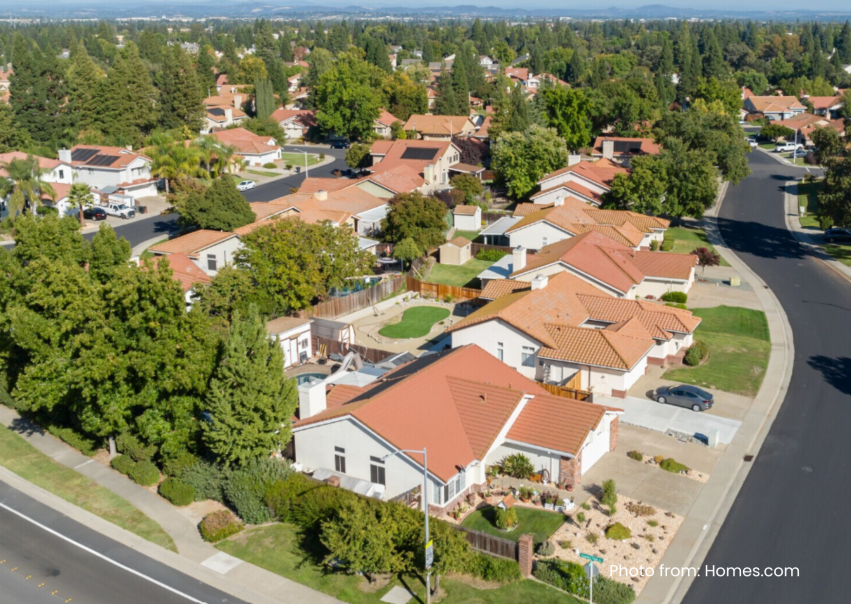
Cirby Ranch -Best for Established, No-Frills Suburban living
Ranchers, mature trees, and the best Chinese food you’ll find in Roseville
Cirby Ranch is established, middle-of-the-road Roseville — and I mean that as a compliment. Lots of single-story ranchers on tree-lined cul-de-sacs, families that stay for generations, and a pace of life that feels a half-step slower than the newer master-planned communities. If you need access to Highway 80, Cirby Ranch puts you on the eastern side of the city with a quick shot to the freeway.
Here’s a niche but real selling point: Cirby Ranch is the closest major neighborhood to Skatetown Ice Arena. If you’re a hockey player, figure skater, or have kids in skating programs, living here will literally give you hours of your life back over the course of a season. The neighborhood is also home to NixTaco, which has a borderline cult following in Roseville.
The honest trade-off: These are 1970s and 1980s builds, and the condition is binary — homes are either fully updated or in dire need of renovation. There’s not much in between. Cirby Ranch also borders Citrus Heights to the south, which isn’t inherently a negative but is worth noting for buyers who want to be squarely in the Roseville ecosystem. While there are plenty of established shops nearby, there aren’t many standout destinations beyond NixTaco.
📊 Median sale price: ~$625K–$638K | Avg. days on market: ~9–11 days | Schools: Oakmont High (A−), Eich Middle (B+) | Build era: 1970s–1980s
🔗 View current market data and homes for sale in this neighborhood
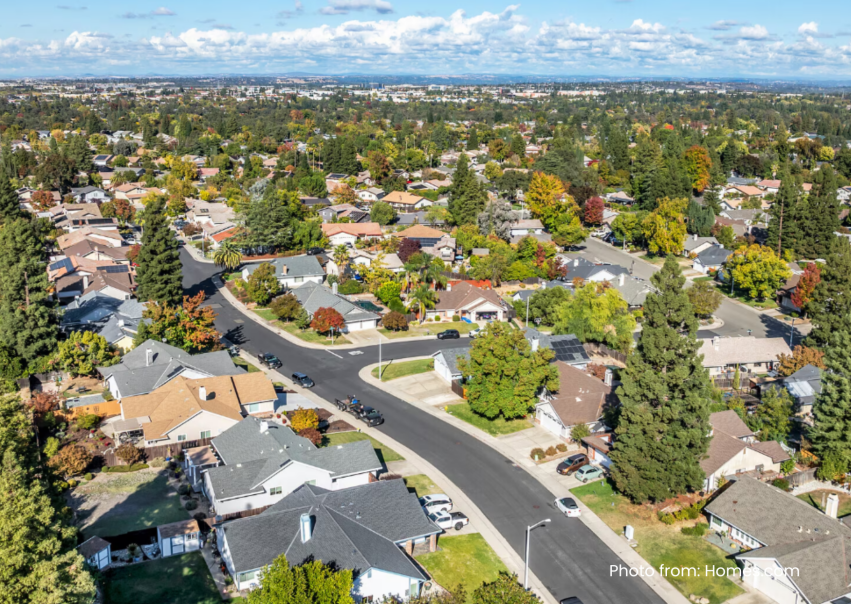
Sun City Roseville -Best for Active Adult (55+) Living
Two golf courses, a restaurant, dozens of clubs, and Thursday night prime rib
Sun City Roseville is the 55+ community in Roseville — the largest, most established, and most activity-rich option for active adults. With over 3,300 homes, two golf courses (Timber Creek and Sierra Pines), a restaurant open to the public, a 52,000-square-foot clubhouse, and dozens of social clubs, it operates more like a small resort town than a subdivision. Residents cruise the trails on golf carts. Thursday night, you’ll see them pulling into the clubhouse parking lot for prime rib night with live music.
Homes range from compact 1,200-square-foot floor plans up to 2,500-square-foot models with three-car garages and golf course views. Built by Del Webb in the 1990s, the community offers mature landscaping and established trees that newer 55+ communities can’t match.
The honest trade-off: The 1990s construction means many homes are reaching the age where roofs, HVAC systems, and interiors need updating. Some buyers will want a turnkey home and should budget for renovated properties that command a premium. The HOA covers landscaping and community amenities, but fees and what they include should be reviewed carefully.
📊 Median sale price: ~$585K–$590K | Avg. days on market: ~33–37 days | Homes: ~3,300 | Builder: Del Webb | Build era: 1990s | 55+ community
🔗 View current market data and homes for sale in this neighborhood
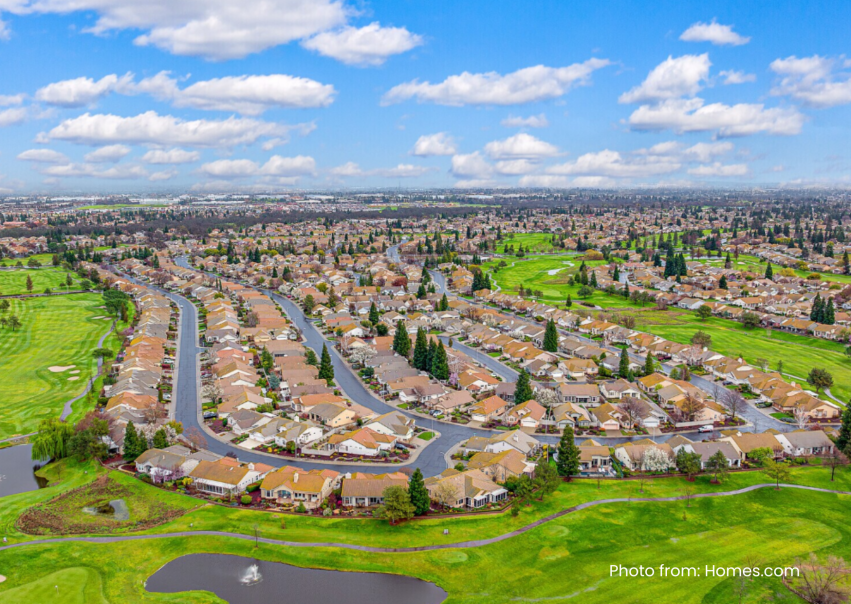
Quail Glen -Best for All-Around Quality of Life
Farmers markets on Sunday, turf fields at Mahany Park, and a three-car garage for good measure
Quail Glen has an all-American suburban vibe that’s hard to beat. Built mostly by JMC Homes in the mid-to-late 1990s, the neighborhood features a strong mix of single-story and two-story homes, many with three-car garages and pools. Lots are generous. The community lands in the Dry Creek School District, which is one of the smaller, more well-regarded districts in the area.
My personal favorite feature: Quail Glen is walking distance to the Sunday farmers market, which sets up in the Martha Riley Library and Roseville Rec Center parking lot at Mahany Park. That same park has a turf football and soccer field, a cool dog park, and connected trails. It’s the kind of place where your weekend morning routine practically plans itself — walk to the farmers market, let the dog run, grab coffee, walk home.
The honest trade-off: Homes date to the 1990s, and many need interior updates. Some of the pools are reaching the age where refinishing is necessary. But there isn’t a dramatic downside here — Quail Glen is a solid, well-rounded neighborhood that delivers on the fundamentals without a lot of fanfare.
📊 Median sale price: ~$699K–$795K | Avg. days on market: ~16–18 days | Builder: JMC Homes | Schools: Dry Creek District | Build era: Mid–late 1990s | Very competitive
🔗 View current market data and homes for sale in this neighborhood
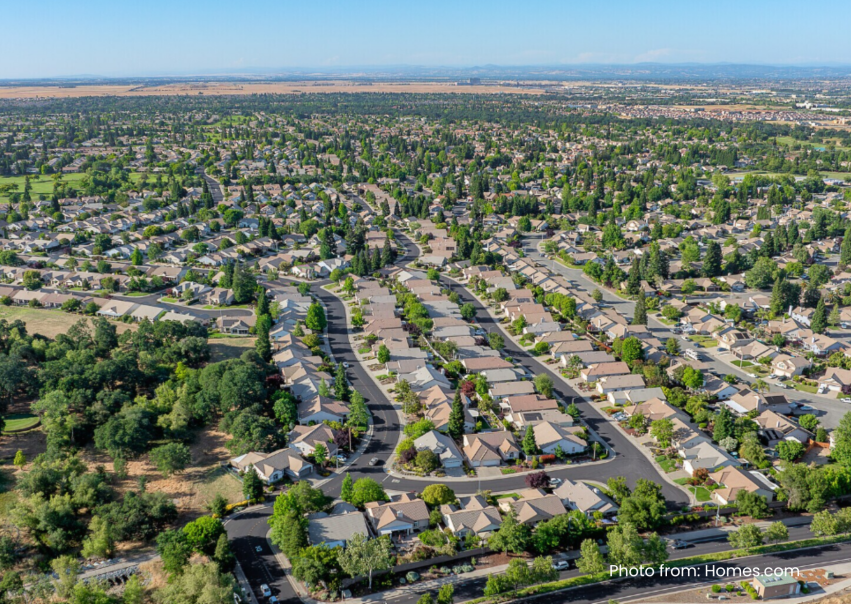
Cherry Glen -Best for Walkability and Downtown Character
Roseville’s most urban-feeling neighborhood, half a mile from Downtown
Cherry Glen is the wild card on this list — and that’s exactly why it belongs here. While most Roseville neighborhoods are suburban and car-dependent, Cherry Glen sits just half a mile south of Downtown Roseville and delivers a walkable, in-the-mix lifestyle that nothing else in the city can match. Coffee shops, bars, restaurants, walking trails, and the city’s holiday events and street fairs are all accessible on foot.
The housing stock is entirely different from the rest of Roseville. Many homes date to the earlyto-mid 1900s. They started as small one-bedroom or two-bedroom homes and have been expanded, added onto, and personalized over the decades. Many lack garages or have detached garages that were added later. You can sometimes find properties with two units or two houses on one lot — desirable for buyers who want rental income or multi-generational living. The city is investing heavily in Downtown Roseville’s development, which means Cherry Glen is positioned to benefit from continued growth in walkable dining, retail, and entertainment.
The honest trade-off: The homes are older and small. While they have character, they lack modern amenities — open floor plans, large master suites, and updated systems are the exception, not the rule. You’ll also see some homeless activity from time to time, which is an honest reality of living near a downtown core. This is not the neighborhood for buyers who want a turnkey suburban experience — it’s for people who value walkability and character above square footage.
📊 Median sale price: ~$460K–$557K | Avg. days on market: ~34 days | Homes: ~250 | Build era: Early–mid 1900s | Most walkable neighborhood in Roseville
🔗 View current market data and homes for sale in this neighborhood
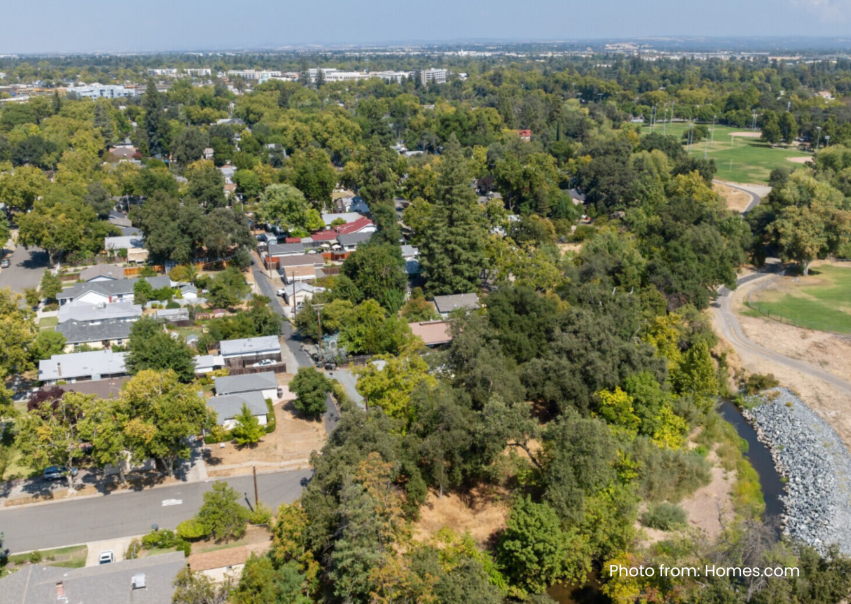
Finding Your Roseville Neighborhood
Twelve neighborhoods out of more than thirty. That’s the real story of Roseville — it’s not one community, it’s a collection of communities that happen to share excellent infrastructure, a strong job market proximity, and some of the best-maintained parks and trails in the Sacramento region. The neighborhoods that didn’t make this list — places like Pleasant Grove, Stanford Ranch, Cresthaven, and Foothill Junction — all have their own strengths and loyal residents.
The best way to choose? Visit. Drive the streets on a weekday evening. Walk the trails on a Saturday morning. Eat dinner at the spots that locals actually go to. No amount of online research replaces the feel of being in a neighborhood.
If you’re considering a move to Roseville and want a guided tour of any of these neighborhoods, we’d love to help you find the right fit. Reach out to the Goolsby Group for a no-pressure conversation about what you’re looking for and where you might land.
.png?w=851)
Frequently Asked Questions
1. What are the best neighborhoods in Roseville CA for families?
Highland Reserve, WestPark, Fiddyment Farm, and Quail Glen are all excellent options for families. Each offers strong schools, parks, trails, and a range of home sizes. Highland Reserve provides the most convenient location, while Fiddyment Farm offers the newest construction with brand-new homes still available.
2. What is the most expensive neighborhood in Roseville?
Stoneridge and Johnson Ranch are the most expensive neighborhoods in Roseville, with median sale prices approaching or exceeding $865K–$879K. Johnson Ranch commands a premium largely due to its Granite Bay High School zoning, while Stoneridge’s pricing reflects its view lots, trail access, and overall affluence.
3. Is Roseville CA a good place to live?
Roseville consistently ranks among the best places to live in California. The city offers top-rated schools, over 80 parks, an extensive trail network, low crime rates relative to the region, and a municipal utility system (Roseville Electric) that keeps costs lower than neighboring cities. The median home price sits in the mid-$600Ks as of early 2026, which is well below the California state average
4. What is the safest neighborhood in Roseville?
Fiddyment Farm has been ranked as one of the safest neighborhoods in Roseville by neighborhood safety databases. Its location in the far northwest corner of the city, with minimal pass-through traffic, contributes to its low crime profile. That said, the majority of Roseville neighborhoods rank in the top 50% for safety.
5. How far is Roseville from Sacramento?
Roseville is approximately 20 miles northeast of downtown Sacramento, with a typical drive time of 25–35 minutes depending on traffic and which Roseville neighborhood you’re starting from. Interstate 80 provides direct freeway access to Sacramento’s central core.
6. Are there 55+ communities in Roseville?
Yes. Sun City Roseville is the largest and most established 55+ active adult community, with over 3,300 homes, two golf courses, a clubhouse, and dozens of clubs and activities. There are also smaller, newer 55+ communities in the WestPark area built by Lennar and Del Webb.
7. What are the best schools in Roseville CA?
Granite Bay High School (A+) is the highest-rated public high school in Roseville and serves the Johnson Ranch neighborhood. Oakmont High (A−), Roseville High (A), and West Park High (A−) are all strong performers. At the elementary and middle school level, the Dry Creek Joint Elementary School District and Eureka Union School District consistently earn high marks. School boundary assignments vary by address, so always verify before purchasing.
8. Is Roseville considered part of Sacramento?
Roseville is an independent city in Placer County, not part of Sacramento or Sacramento County. However, it’s commonly referred to as part of the greater Sacramento metropolitan area. Roseville operates its own municipal utility (Roseville Electric), police department, and parks system — which is part of what makes the city feel distinct from Sacramento proper.
9. What is the average home price in Roseville CA?
As of early 2026, the citywide median home price in Roseville sits between approximately $630K and $670K depending on the data source and time period. Prices vary significantly by neighborhood — Cherry Glen offers entry points in the mid-$400Ks, while Stoneridge and Johnson Ranch push into the $800K–$900K+ range.
10. Is Roseville better than Folsom or Rocklin?
Each city has distinct strengths. Roseville offers the widest variety of neighborhoods, the most extensive parks and trail system, and the largest concentration of shopping and dining in the region. Folsom provides Folsom Lake access and a strong historic downtown. Rocklin offers a slightly more affordable price point with comparable school quality. The best choice depends on your priorities, commute, and lifestyle preferences.
11. What should I know about Mello-Roos taxes in Roseville?
Newer neighborhoods in West Roseville — including WestPark and Fiddyment Farm — typically carry Mello-Roos special tax assessments that fund infrastructure like roads, schools, and sewers. These can add $2,500 to $4,500+ annually to your property tax bill. Older neighborhoods like Diamond Oaks, Cirby Ranch, and Highland Reserve generally do not have Mello-Roos. Always check the specific tax parcel before making an offer.
11. Where do Bay Area transplants typically move in Roseville?
Relocating buyers from the Bay Area often gravitate toward Stoneridge, Highland Reserve, and Johnson Ranch for their combination of top-rated schools, established character, and relative value compared to Bay Area pricing. Buyers wanting brand-new construction tend to look at Fiddyment Farm and WestPark. San Francisco was the number one origin metro for Roseville home searches as of late 2025.

Schedule a Strategy Session
You can book a reservation using either of the links below or you can call Geoff at 916-672-1030 or email at [email protected]
.png?w=380&h=254)
Schedule Virtual Session